
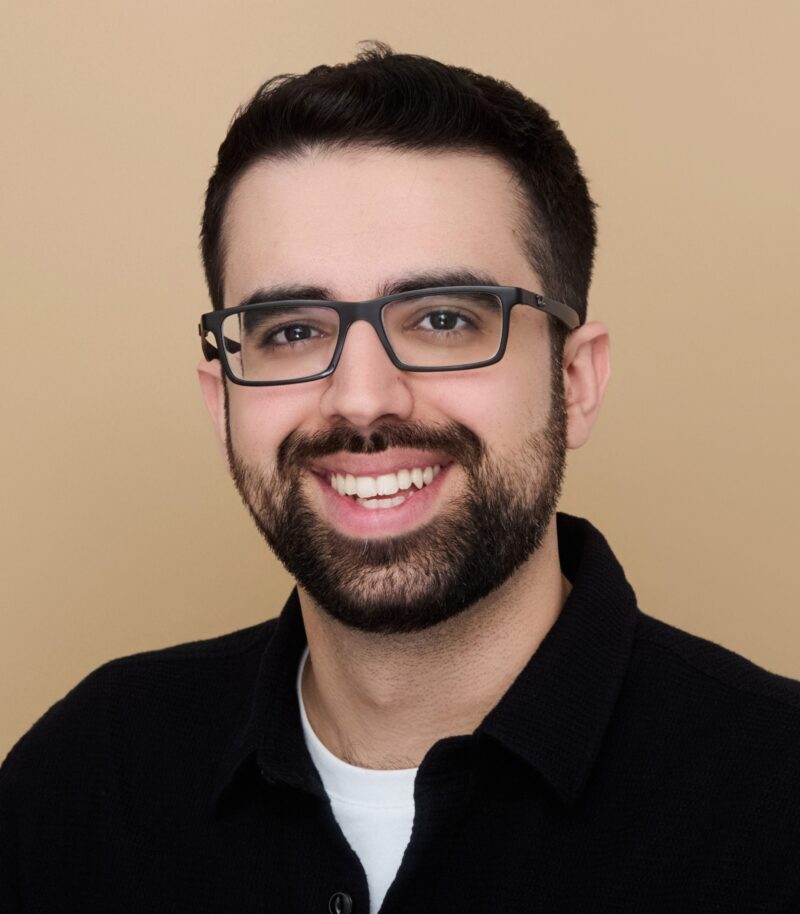
Alan Kian, M.A.
No matter what brought you here, the fact that you are looking for support means that some part of you is already reaching toward change. That takes real courage, and I do not take it lightly. My hope is to offer you a warm, steady space where you feel genuinely heard and supported. From there, we can begin to untangle what has been weighing on you and look for a way forward together.
I provide psychotherapy to adults and couples. I also offer psychodiagnostic assessments. These can help clarify a diagnosis and shape the course of treatment.
Individual Adult Work: In my work with adults, I support people facing a wide range of concerns. These include depression and low mood, generalized and social anxiety, panic, health anxiety, and OCD. I also help with grief and loss, high stress and burnout, low self-esteem and harsh self-criticism, difficulty managing emotions, anger, loneliness, and procrastination. Many clients come in with workplace difficulties or strained relationships with partners, family, or friends. I also work with life transitions and adjustment issues. These include career changes, moving to a new city or country, separation and divorce, new parenthood, retirement, and adjusting to illness or injury. Many clients also bring existential concerns. They may have questions about meaning and purpose, mortality, freedom and choice, regret, isolation, and how to live in line with what truly matters to them. Whatever the starting point, our work is shaped around what matters most to you.
Couple Therapy Work: In couple therapy, I help partners understand and change the patterns that keep them feeling distant or at odds. Many couples find themselves having the same argument in different forms, drifting apart without quite knowing when it started, or struggling to say what they actually feel and need. When partners learn to reach for one another more openly, and to respond to each other with care, the bond between them tends to grow steadier and closer. That idea sits at the heart of how I approach this work. Together, we can address communication difficulties, conflicts that repeat without resolving, and emotional distance and the rebuilding of closeness. We can also work on the loss of trust, including the difficult work of repair when there has been an affair or another betrayal. Couples also come in to navigate major transitions as a team, whether moving in together, marriage, or becoming parents. Some want to find a workable balance between shared time and each partner’s independence, or to ease everyday friction over money, parenting, and extended family. Partners of all relationship types and backgrounds are welcome in my practice.
Couple therapy begins with a joint session, where we map out the concerns you most want to address. I then meet with each partner individually, drawing on evidence-based questionnaires and a personal history to understand how each of your own stories shapes what unfolds between you. From there, we return to joint sessions and focus our work on the areas that matter most to you both.
My core areas of specialization are OCD, anxiety, and mood difficulties. OCD can take many different forms, and I work across its range. This includes contamination fears, perfectionism, and worries about causing accidental harm. It also includes unwanted intrusive or sexual thoughts, struggles around intimacy, and the persistent pull of “just right” feelings. For these, I draw on specialized, evidence-based methods such as Exposure and Response Prevention (ERP) and Inference-Based CBT (I-CBT). Anxiety is a large part of my practice as well. It may surface as generalized worry, social fear, health anxiety, or panic. I also work a great deal with depression, where much of the work involves gently loosening the patterns of thought and feeling that keep low mood in place. I have a further interest in existential and meaning-oriented work. I am drawn to how our deeper beliefs about ourselves and the world influence the choices we make and the lives we build.
Our early sessions are mostly about getting oriented. I want to understand what brought you in, and what you’re hoping might feel different. As part of this, I conduct a comprehensive, scientific-based assessment of your difficulties. This involves evidence-based questionnaires alongside our conversations. It helps you gain an understanding of what might be at the root of your struggles with anxiety, depression, or your relationships. That shared understanding becomes the foundation we build a treatment plan on. From there, my approach is integrative, and I draw on whatever fits you and the change you’re hoping for. These methods include Client-Centred Therapy, ERP, I-CBT, Emotion-Focused Therapy (EFT), Mindfulness-Based Cognitive Therapy (MBCT), Acceptance and Commitment Therapy (ACT), Motivational Interviewing (MI), and Existential Psychotherapy. I also integrate psychoanalytic, psychodynamic, and trauma-informed approaches into my work. These help us understand how past experiences and relationships may shape your present difficulties. As much as I value these methods, I find the relationship we build together matters even more. I strive to be warm and straightforward, and to stay curious about your experience rather than quick to judge it. Most people find it easier to open up once they sense they aren’t being evaluated. It is often in that ease that the harder, more honest conversations become possible. I also begin from the belief that you arrive with real strengths of your own. Much of what we do together is putting them to use as you heal.
I am in the final stretch of my PhD in Clinical Psychology at York University, and I also hold a Master of Arts from the same department. At the Centre for Interpersonal Relationships, I am completing my doctoral residency under the supervision of Dr. Lila Hakim, Dr. Dino Zuccarini, and Dr. Marc Bedard.
Throughout my training, I have completed practica in several clinical settings. These include the Frederick W. Thompson Anxiety Disorders Centre at Sunnybrook Health Sciences Centre and the York University Psychology Clinic. In these settings, I provided psychological treatment and psychodiagnostic assessment for adults presenting with OCD, anxiety, and a range of other concerns.
As a doctoral student, I conduct supervised research on primal world beliefs, the broad assumptions we carry about what the world is fundamentally like. I am studying how those beliefs shape our wellbeing, and how they affect our ability to step back from negative thoughts. I have also published peer-reviewed work in the field. A recent example is listed below:
Kian, A., Frances, A. J., & Goldfried, M. R. (2025). What clinicians need to know about Freud’s contribution to therapy consensus. Practice Innovations. Advance online publication. https://doi.org/10.1037/pri0000303
I have presented my research at conferences of the Society for the Exploration of Psychotherapy Integration (SEPI) and the Society for Psychotherapy Research. I have also guest lectured in personality psychology at York University. Since 2021, I have served as Editor of The Integrative Therapist, SEPI’s official publication. I have also produced and directed two video series on therapy and the psychology of meaning: Talking Therapy, hosted by Dr. Marvin Goldfried and Dr. Allen Frances, and Awakening from the Meaning Crisis, created by Dr. John Vervaeke. I am a member of the Society for the Exploration of Psychotherapy Integration.
Away from the office, you’ll most often find me with family and friends, reading classic literature, watching films, or out on a long walk.
Treatments
- Acute/Single-Event Trauma
- Anger & Emotion Regulation
- Anxiety & Stress
- Attention Deficit & Learning Challenges
- Career & Workplace
- Complex/Long-Term Trauma
- Couples Therapy
- Depression, Mood & Grief
- Interpersonal Relationships
- Multicultural
- Obsessive-Compulsive
- Personality
- Self-Growth & Self-Esteem
Assessment
- Attention Deficit & ADHD
- Autism Spectrum & Developmental Disorder
- Personality & Interpersonal
- Psychodiagnosis & Mental Health
Therapies
- Acceptance and Commitment Therapy (ACT)
- Attachment-Based/Mentalization Therapy
- Client-Centered Therapy
- Cognitive-Behavioural Therapy (CBT)
- Dialectical-Behavioural Therapy (DBT)
- Emotion(ally)-Focused Therapy (EFT, EFFT)
- Existential-Humanistic Therapy
- Integrative Therapy
- Mindfulness-Based Therapies (E.G., MBSR, MBCT)
- Psychodynamic/Analytic
Make An Appointment
Help Is Available
Our team is here to provide inclusive and accessible solutions to help you in building a secure, resilient self, and help strengthen your relationships.

Toll Free: 1.855.779.2347
Monday
Tuesday
Wednesday
Thursday
Friday
Saturday
Sunday
8:00AM – 8:00PM
8:00AM – 8:00PM
8:00AM – 8:00PM
8:00AM – 8:00PM
8:00AM – 5:00PM
8:30AM – 4:30PM
Closed
Eastern Time Zone
Ottawa Centre
336 MacLaren St.
Ottawa ON K2P 0M6
(MacLaren & O’Connor)
Local: 613.686.6645
Fax: 613.714.1013
St. Catharines Centre
300 – 43 Church St.
St. Catharines ON L2R 7E1
(Church & Wellington)
Local: 647.417.0182
Fax: 647.793.5438
Toronto Centre
520 – 790 Bay St., Box 87
Toronto ON M5G 1N8
(Bay & College)
Local: 647.417.0182
Fax: 647.793.5438
Charlottetown PE Centre
101 – 75 Fitzroy St.
Charlottetown PE C1A 1R6
(Fitzroy & Queen)
Local: 782.355.3233
Fax: 782.355.3232
DISCLAIMER
All stock photos used on this website are symbolic representations of clients or the therapeutic process and do not include actual clients. They are not indicative of a promised counseling outcome, as each individual’s experience in therapy is unique.
By clicking the any of the social media links, you acknowledge that a link or information from the Centre For Interpersonal Relationships Inc. website may be posted on your corresponding account. The Centre For Interpersonal Relationships Inc. cannot be held responsible for breach of privacy while individuals willingly create a connection between our public website and their social media(s) account(s). Clicking on any of the link buttons does not imply nor suggest in any way that you are, have been or will be a client at CFIR.
Centre For Interpersonal Relationships Inc. strives to ensure that all information contained in this website is accurate and reliable. The Centre For Interpersonal Relationships Inc., its Board of Directors, management, staff and/or its associates shall not be held responsible nor accept any form of liability for any type of injury, loss or damage as a direct or indirect result of the use, inability to use, misuse or abuse of the website’s content or functions.
WWW.CFIR.CA is a gateway offered as a service to independent registered mental health professionals. The use of “we”, “our” and “ours” refers to registered mental health professionals. The information contained in this website is not intended to replace consultations with your mental health professional or to provide medical advice or diagnosis.
CFIR Clinical Psychology Residency—CPA Accreditation News
Psychologists at the Centre for Interpersonal Relationships (CFIR) are thrilled to announce that our doctoral residency training program has received accreditation by the Canadian Psychological Association (CPA) for a 4-year term. Our next site visit will take place 2026-2027.
Information regarding accreditation can be obtained by contacting the CPA Accreditation Office at:
Canadian Psychological Association
141 Laurier Avenue West, Suite 702
Ottawa, Ontario, K1P 5J3
Tel: 613-237-2144
Toll Free: 1-888-472-0657
Email: accreditationoffice@cpa.ca
Website: https://www.cpa.ca/accreditation/
Our registered psychologists are proudly affiliated as clinical supervisors with the following universities:
UNIVERSITY OF OTTAWA

UNIVERSITY OF TORONTO