

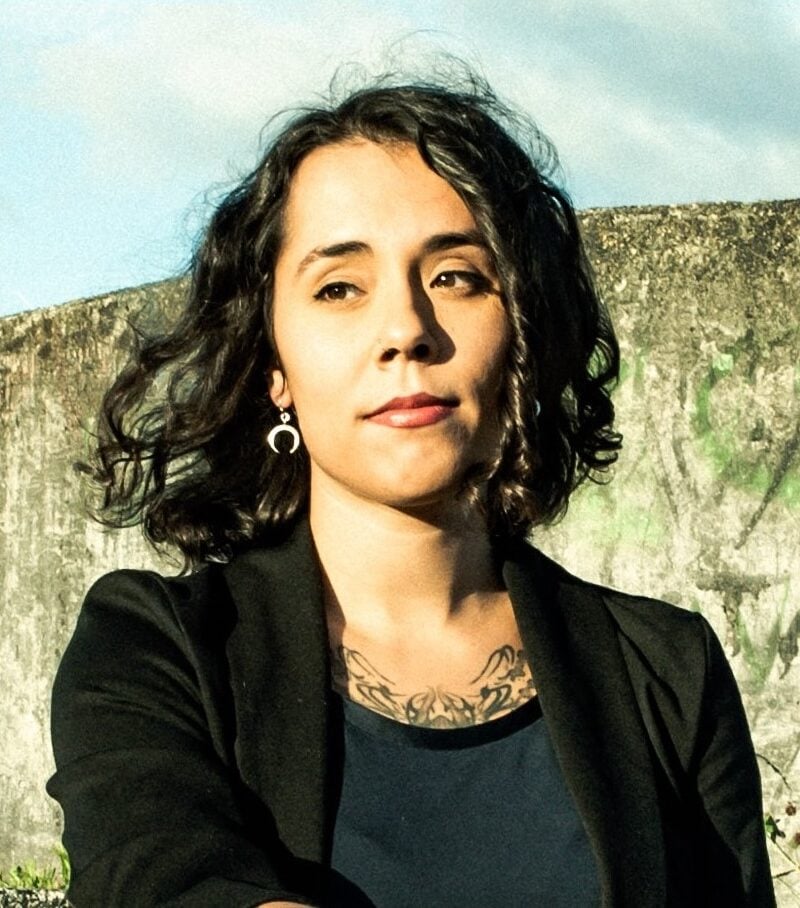
Dr. Cara Samuel, C.Psych.
As a late-diagnosed neurodivergent (AuDHD) psychologist, I bring both professional and lived experience to psychological assessment. Being diagnosed later in life, after years of having to advocate for a more accurate understanding of myself, has deeply shaped how I approach assessment. When I work with children and families, I also carry the perspective of having once been the child who felt different, struggled within systems, and was not always seen clearly. These experiences are part of why I believe assessment should be thoughtful, collaborative and grounded in the whole person rather than simply focused on assigning a diagnosis.
I provide assessment for children, adolescents and adults across a broad range of concerns. This includes autism and ADHD; psychoeducational and learning; mental health and psychodiagnostic; trauma, PTSD and complex PTSD; and personality functioning. I have particular interest in complex or overlapping profiles, including late-identified neurodivergence, masking and internalized presentations, and the intersections of gender, sexuality, race, culture and life experience with trauma, personality, and mental health.
My approach is comprehensive, integrative and individualized. Psychological assessment offers one way of understanding your or your child’s experiences; it is not the only way. Tests, interviews and diagnostic frameworks can provide useful information, but I believe they need to be understood alongside development, relationships, family, culture, identities, environment, strengths and lived experience. I aim for assessment to be something we do collaboratively rather than something that is simply done to you or your child. When we discuss findings, the goal is not simply to deliver a diagnosis, but to think together about what the findings mean, whether they fit your experience, and how you want to integrate that understanding into your life. Recommendations are developed around the actual needs and goals that brought you to assessment.
My work is neurodiversity-affirming, strengths-based, trauma- and violence-informed, and grounded in cultural safety. Given both my lived and professional experience, these are not buzzwords to me. Trauma-informed care considers how trauma may shape a person’s experiences and how services can avoid reproducing harm. Adding a violence-informed lens also asks us to examine how the very systems and institutions we work within, including psychology itself, can cause or reproduce harm, and the responsibility I have to address that in my work. Cultural safety similarly requires attention to power, racism, colonialism, institutional history and our own assumptions, while recognizing that the person or family receiving the service is central in determining whether that service feels respectful and safe.
My approach is direct, transparent, flexible and nonjudgmental. I welcome questions, disagreement and feedback throughout the assessment process. I want individuals and families to feel like active participants in making sense of the information we gather and in deciding what is useful to take forward. I especially welcome neurodivergent people and families; LGBTTQIA+, gender-diverse, and racialized clients; and people whose previous experiences with educational, medical or mental health systems have left them feeling misunderstood.
I have extensive experience in trauma and complex trauma, as well as in critical and decolonial approaches to psychology. My career has included work in sexual assault and gender-based violence counselling, crisis and suicide intervention, community mental health, correctional and forensic settings, and the educational system. I have also spent the last several years living and working in northern and remote contexts, including in Nunavut, the Yukon and northern British Columbia. That work has strongly shaped how I think about culture, power, structural inequities and the limits of applying psychological frameworks without considering the context in which people live.
I completed my PhD in Clinical and Counselling Psychology at the University of Toronto and a MSc in Clinical Lifespan (Developmental) Psychology at the University of Victoria. My research has focused on trauma and complex trauma, and critical and decolonial approaches to psychology, with a significant focus on northern and Indigenous contexts. I am a registered psychologist in Ontario and British Columbia.
Samuel C. & Ansloos, J. P. (submitted). Framing Child Abuse and Governing Protection in Nunavut: Policy Commitments, Implementation Gaps, and Structural Constraints. Child Abuse & Neglect.
Samuel, C., Anloos, J. P., Makkik, R., Rowe, S., Hey, B., & Crowley, A. (submitted). What Does Trauma-Informed Child Welfare Require? Inuit Caregivers’ Leadership, Relational Care, and Institutional Accountability in Nunavut. Child & Youth Services.
Samuel, C. & Ansloos, J. P. (accepted). The Qallunaat politics of protection: Disrupting settler trauma psychology. Journal of Critical Race and Ethnic Studies.
Nault, S., Samuel, C., & Peltier, S. (2024). When ink is a creation story: On life promotion, self-injury and suicide. Storying the Land on Our Bodies: A Symposium on Tattoos, Healing and Health Justice. University of Toronto.
Ansloos, J. P., Samuel, C., Makkik, R., Rowe, S., Musani, I., Hey, B., Clark, S., Tootoo, T., Kunuk, C., Akalukjuk-Hacket, E., Crowley, A., Williams, B., & Afram, D. (2024). Care for Caregivers: A pilot project on trauma-informed support for Inuit caregivers at the Arctic Children and Youth Foundation. Toronto, ON and Iqaluit, NU: CHSA & ACYF.
Samuel, C. & Ortiz, D. (2021). “Method and meaning”: Storytelling as decolonial praxis in the psychology of racialized peoples. New Ideas in Psychology, 62. https://doi.org/10.1016/j.newideapsych.2021.100868
Ortiz, D., Samuel, C., Johnson, P., Punwani, V., Mucina, D. (November, 2021). BIPOC support groups in Canada: Insights on who attends, their benefits and drawbacks. Poster presented at the Association for Behavioral & Cognitive Therapies annual convention, New Orleans, LA.
Assessment
Make An Appointment
Help Is Available
Our team is here to provide inclusive and accessible solutions to help you in building a secure, resilient self, and help strengthen your relationships.

Toll Free: 1.855.779.2347
Monday
Tuesday
Wednesday
Thursday
Friday
Saturday
Sunday
8:00AM – 8:00PM
8:00AM – 8:00PM
8:00AM – 8:00PM
8:00AM – 8:00PM
8:00AM – 5:00PM
8:30AM – 4:30PM
Closed
Eastern Time Zone
Ottawa Centre
336 MacLaren St.
Ottawa ON K2P 0M6
(MacLaren & O’Connor)
Local: 613.686.6645
Fax: 613.714.1013
St. Catharines Centre
300 – 43 Church St.
St. Catharines ON L2R 7E1
(Church & Wellington)
Local: 647.417.0182
Fax: 647.793.5438
Toronto Centre
520 – 790 Bay St., Box 87
Toronto ON M5G 1N8
(Bay & College)
Local: 647.417.0182
Fax: 647.793.5438
Charlottetown PE Centre
101 – 75 Fitzroy St.
Charlottetown PE C1A 1R6
(Fitzroy & Queen)
Local: 782.355.3233
Fax: 782.355.3232
DISCLAIMER
All stock photos used on this website are symbolic representations of clients or the therapeutic process and do not include actual clients. They are not indicative of a promised counseling outcome, as each individual’s experience in therapy is unique.
By clicking the any of the social media links, you acknowledge that a link or information from the Centre For Interpersonal Relationships Inc. website may be posted on your corresponding account. The Centre For Interpersonal Relationships Inc. cannot be held responsible for breach of privacy while individuals willingly create a connection between our public website and their social media(s) account(s). Clicking on any of the link buttons does not imply nor suggest in any way that you are, have been or will be a client at CFIR.
Centre For Interpersonal Relationships Inc. strives to ensure that all information contained in this website is accurate and reliable. The Centre For Interpersonal Relationships Inc., its Board of Directors, management, staff and/or its associates shall not be held responsible nor accept any form of liability for any type of injury, loss or damage as a direct or indirect result of the use, inability to use, misuse or abuse of the website’s content or functions.
WWW.CFIR.CA is a gateway offered as a service to independent registered mental health professionals. The use of “we”, “our” and “ours” refers to registered mental health professionals. The information contained in this website is not intended to replace consultations with your mental health professional or to provide medical advice or diagnosis.
CFIR Clinical Psychology Residency—CPA Accreditation News
Psychologists at the Centre for Interpersonal Relationships (CFIR) are thrilled to announce that our doctoral residency training program has received accreditation by the Canadian Psychological Association (CPA) for a 4-year term. Our next site visit will take place 2026-2027.
Information regarding accreditation can be obtained by contacting the CPA Accreditation Office at:
Canadian Psychological Association
141 Laurier Avenue West, Suite 702
Ottawa, Ontario, K1P 5J3
Tel: 613-237-2144
Toll Free: 1-888-472-0657
Email: accreditationoffice@cpa.ca
Website: https://www.cpa.ca/accreditation/
Our registered psychologists are proudly affiliated as clinical supervisors with the following universities:
UNIVERSITY OF OTTAWA

UNIVERSITY OF TORONTO


