
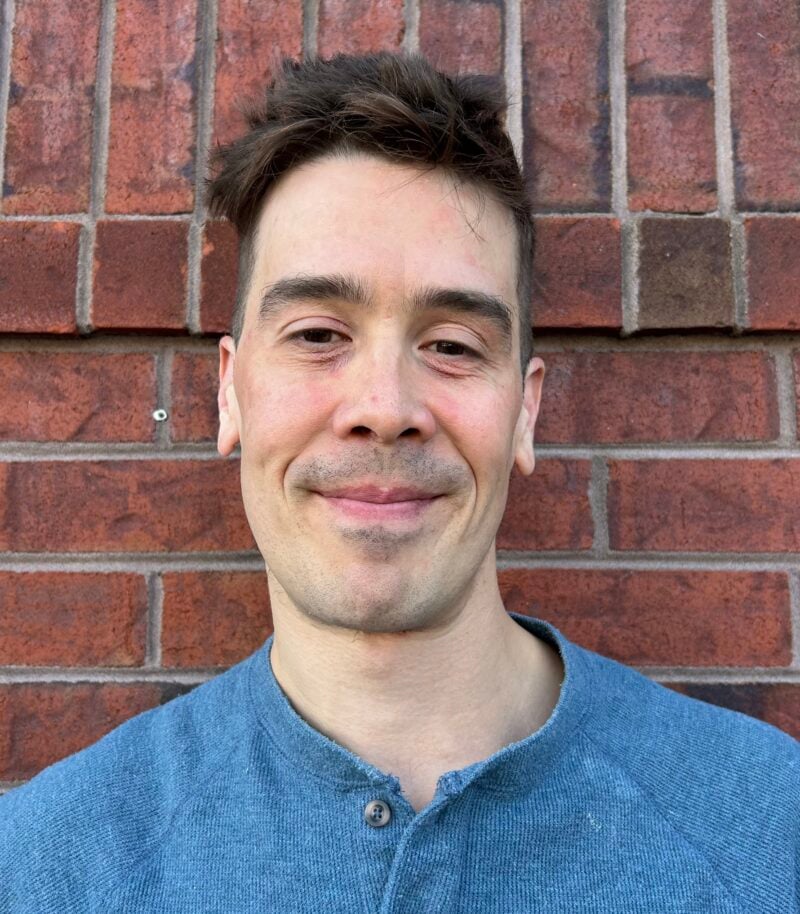
Brandon Hey, Ph.D.
Beginning psychotherapy can bring up many different feelings. You may be looking for relief from symptoms that have become difficult to understand or manage. You may be wondering why certain patterns keep repeating in your life or relationships. Or you may simply know that something needs to change, even if you are not yet sure what that change should look like. Whatever brings you to therapy, I believe it is important to understand your experiences within the broader context of your life, relationships, culture, social identities, and environment. My aim is to provide a warm, collaborative, and non-judgmental space where we can make sense of what you are experiencing and work together toward meaningful and lasting change.
Individual Adult Therapy
In my work with adults, I support people experiencing a wide range of emotional, psychological, and relationship difficulties. These include anxiety and depression, trauma and posttraumatic stress, grief and loss, perfectionism and self-criticism, difficulties managing emotions or anger, substance use concerns, major life transitions, separation and relationship loss, and difficulties developing or maintaining satisfying relationships. I also work with people who may appear to be doing well in their lives but struggle internally with feelings of inadequacy, loneliness, disconnection, shame, or uncertainty about who they are and what they want.
I have a particular interest in working with developmental and relational trauma, attachment and relationship difficulties, and longstanding patterns in how people see themselves and relate to others. Sometimes the ways we learned to cope earlier in life can create difficulties later on. You may pull away from others, rely heavily on yourself, seek reassurance or approval, hide your emotions, put other people’s needs ahead of your own, or feel pressure to perform perfectly. Therapy can help us understand how these patterns developed, recognize how they may be affecting you today, and find new ways of relating to yourself and the people who matter to you.
My approach to psychotherapy is integrative, relational, and emotion-focused. I draw especially from Psychodynamic and interpersonal therapies, Emotionally-Focused Therapy (EFT), process-experiential and attachment-based therapies, and approaches developed for trauma and dissociation. I also use strategies from Cognitive Behavioural Therapy (CBT), Schema Therapy, and Dialectical Behaviour Therapy (DBT) when they fit a client’s needs. Rather than using the same approach with everyone, I work with you to understand what you would like to change, what may be contributing to your difficulties, and which approaches are most likely to help.
What You Can Expect in Therapy
Our first meetings will focus on getting to know one another and understanding what has brought you to therapy. We will talk about your current concerns, personal and relationship history, strengths, ways of coping, cultural background and other important parts of your identity, and what you would like to be different in your life.
I also conduct a comprehensive, scientifically informed assessment of your difficulties. Depending on your needs, this may involve exploring important experiences across your life and using evidence-based psychological measures. These tools can help us better understand your symptoms, personality and relationship patterns, attachment experiences, emotions, coping strategies, and other factors that may be important to your treatment. We can then bring this information together to develop a shared understanding of your difficulties and a treatment plan that is both grounded in evidence and meaningful to you.
As therapy progresses, we may work on reducing the distress you are experiencing now while also exploring the deeper patterns beneath it. I pay close attention to what happens in relationships. Together, we may look at what you have learned to expect from yourself and others, what happens when you feel hurt, rejected, unseen, or disconnected, and how ways of protecting yourself in the past may still shape your life and relationships today.
Therapy with me is collaborative, active, and trauma-informed. I will listen carefully and compassionately, but I will also share observations, ask questions, and help you notice patterns that may be difficult to see on your own. My hope is that therapy helps you not only feel better, but also understand yourself more fully and have greater freedom in how you respond to emotions, relationships, and difficult experiences.
Training and Professional Experience
I completed my PhD in Counselling and Clinical Psychology at the University of Toronto, where my doctoral training included psychotherapy, psychological assessment, clinical research, and consultation. I recently completed my predoctoral clinical psychology internship at the Centre for Psychological Services and Research at the University of Ottawa. There, my clinical work focused on psychodynamic and interpersonal psychotherapy, developmental and relational trauma, structural dissociation, personality and relationship functioning, and comprehensive psychological assessment. My internship also included co-leading an interpersonal and psychodynamic psychotherapy group and advanced training in approaches to case formulation and treatment that can be used across different psychological difficulties.
My previous clinical training and practice have included the Centre for Interpersonal Relationships (CFIR), University of Toronto/OISE Psychology Clinic, Fairmarc Psychology Centre, Danforth Psychology Centre, and Step Stone Psychology. Across these settings, I have provided psychotherapy and psychological assessment to adults from diverse backgrounds. My work has included trauma, anxiety and depression, grief and bereavement, perfectionism, substance use, relationship difficulties, personality concerns, ADHD, and other attention and cognitive difficulties.
Before and alongside my clinical psychology training, I worked extensively in mental health research, policy, and system improvement. I previously worked at the Centre for Addiction and Mental Health (CAMH) in mental health promotion, implementation science, integrated youth mental health services, and knowledge translation. I later spent several years as a Senior Research and Policy Analyst with the Mental Health Commission of Canada, contributing to national work on mental health and substance use, equity, criminal justice, crisis response, and mental health system improvement. I have also completed cultural safety training through San’yas and Wabano. These experiences have shaped how I think about mental health and strengthened my awareness of the social, cultural, family, community, and institutional contexts that can affect people’s well-being.
My doctoral research focuses on suicidality and life promotion among First Nations and Inuit fathers, Indigenous mental health, relational health, and community-engaged approaches to mental health and suicide prevention. I have published peer-reviewed research and book chapters on Indigenous mental health, suicide prevention, mental health crisis response, and other areas of mental health and community psychology. Across my clinical and research work, I share a common interest in understanding people within the relationships, communities, histories, and systems that shape their lives, and in helping people build greater connection, agency, and psychological well-being.
Treatments
- Acute/Single-Event Trauma
- Anger & Emotion Regulation
- Anxiety & Stress
- Complex/Long-Term Trauma
- Depression, Mood & Grief
- Interpersonal Relationships
- Multicultural
- Obsessive-Compulsive
- Personality
- Self-Growth & Self-Esteem
Assessment
- Attention Deficit & ADHD
- Autism Spectrum & Developmental Disorder
- Personality & Interpersonal
- Psychodiagnosis & Mental Health
Therapies
- Attachment-Based/Mentalization Therapy
- Client-Centered Therapy
- Cognitive-Behavioural Therapy (CBT)
- Emotion(ally)-Focused Therapy (EFT, EFFT)
- Integrative Therapy
- Psychodynamic/Analytic
- Relational Therapy
Make An Appointment
Help Is Available
Our team is here to provide inclusive and accessible solutions to help you in building a secure, resilient self, and help strengthen your relationships.

Toll Free: 1.855.779.2347
Monday
Tuesday
Wednesday
Thursday
Friday
Saturday
Sunday
8:00AM – 8:00PM
8:00AM – 8:00PM
8:00AM – 8:00PM
8:00AM – 8:00PM
8:00AM – 5:00PM
8:30AM – 4:30PM
Closed
Eastern Time Zone
Ottawa Centre
336 MacLaren St.
Ottawa ON K2P 0M6
(MacLaren & O’Connor)
Local: 613.686.6645
Fax: 613.714.1013
St. Catharines Centre
300 – 43 Church St.
St. Catharines ON L2R 7E1
(Church & Wellington)
Local: 647.417.0182
Fax: 647.793.5438
Toronto Centre
520 – 790 Bay St., Box 87
Toronto ON M5G 1N8
(Bay & College)
Local: 647.417.0182
Fax: 647.793.5438
Charlottetown PE Centre
101 – 75 Fitzroy St.
Charlottetown PE C1A 1R6
(Fitzroy & Queen)
Local: 782.355.3233
Fax: 782.355.3232
DISCLAIMER
All stock photos used on this website are symbolic representations of clients or the therapeutic process and do not include actual clients. They are not indicative of a promised counseling outcome, as each individual’s experience in therapy is unique.
By clicking the any of the social media links, you acknowledge that a link or information from the Centre For Interpersonal Relationships Inc. website may be posted on your corresponding account. The Centre For Interpersonal Relationships Inc. cannot be held responsible for breach of privacy while individuals willingly create a connection between our public website and their social media(s) account(s). Clicking on any of the link buttons does not imply nor suggest in any way that you are, have been or will be a client at CFIR.
Centre For Interpersonal Relationships Inc. strives to ensure that all information contained in this website is accurate and reliable. The Centre For Interpersonal Relationships Inc., its Board of Directors, management, staff and/or its associates shall not be held responsible nor accept any form of liability for any type of injury, loss or damage as a direct or indirect result of the use, inability to use, misuse or abuse of the website’s content or functions.
WWW.CFIR.CA is a gateway offered as a service to independent registered mental health professionals. The use of “we”, “our” and “ours” refers to registered mental health professionals. The information contained in this website is not intended to replace consultations with your mental health professional or to provide medical advice or diagnosis.
CFIR Clinical Psychology Residency—CPA Accreditation News
Psychologists at the Centre for Interpersonal Relationships (CFIR) are thrilled to announce that our doctoral residency training program has received accreditation by the Canadian Psychological Association (CPA) for a 4-year term. Our next site visit will take place 2026-2027.
Information regarding accreditation can be obtained by contacting the CPA Accreditation Office at:
Canadian Psychological Association
141 Laurier Avenue West, Suite 702
Ottawa, Ontario, K1P 5J3
Tel: 613-237-2144
Toll Free: 1-888-472-0657
Email: accreditationoffice@cpa.ca
Website: https://www.cpa.ca/accreditation/
Our registered psychologists are proudly affiliated as clinical supervisors with the following universities:
UNIVERSITY OF OTTAWA

UNIVERSITY OF TORONTO