
Attachment Styles – Why Are They Important?

By: Dr. Sara Antunes-Alves, C.Psych.

Human beings are hardwired for connection. Unlike other mammals, we rely absolutely on our attachment figures for survival, for an extended period of time, from birth. Without secure connection, our health is at risk. 

When we experience trauma, the wiring for connection is disrupted and we develop adaptations in order to feel safe. It is important to note here that trauma needn’t necessarily be a “Big T” trauma, which include disturbing experiences that happened to you, such as sexual abuse, loss of a loved one, and violent crimes, but also “little t” traumas, especially ones that repeat throughout our development. “Little t” traumas are ones that cause us distress and uncertainty and can also include experiences that didn’t happen to you but should have. A lack of emotional availability from an attachment figure – even if they had the best of intentions – can be traumatic. 

Our attachment style refers to the behaviours we engage in to feel safe with others. Attachment exists on a spectrum, and we may be a mix of different attachment styles, and with different people. Disruptions in attachment tend to originate from our early developmental years, within our families, but can also be affected by harmful experiences later on, such as with a painful romantic relationship or being bullied in school.

There are four attachment styles, and they are briefly described below:

Secure Attachment:This is the “ideal” attachment leaning, manifesting as a healthy level of interdependence with another and comfort expressing emotions openly; relationships are a place of thriving, but being alone is also not necessarily a distressing place. You feel comfortable relying on another for support and having them rely on you.Avoidance and anxiety are low.

There are three forms of insecure attachment:

Dismissive-Avoidant:This attachment leaning manifests as (emotional) distance from others, valuing a high level of self-sufficiency and independence; closeness feels threatening and efforts to push another away can be prevalent; emotions are generally suppressed and denied. You feel triggered by closeness and intimacy. Avoidance is high and anxiety is low. 

Anxious/Preoccupied:This attachment leaning is characterized by high needs for intimacy and a fear of abandonment and rejection. These are managed by high attunement to another’s emotions and pronounced efforts to meet the other’s needs, often at the expense of their own. Eventually, protest behaviours to feel reassured may occur. You feel triggered by distance and uncertainty. Avoidance is low and anxiety is high. 

Fearful-Avoidant/Disorganized:This attachment leaning manifests in a push-pull dynamic. The individual desires connection with another and simultaneously fears it, leading to inconsistent and ambiguous behaviours in social bonds. Emotions are not regulated well and a sense of shame is prevalent; both closeness and distance can feel triggering. Here, anxiety and avoidance are both high.

The above insecure attachment styles represent clever adjustments as a result of important developmental needs not being met. They reflect humanity’s impressive propensity for survival through adaptation. However, at some point, you may find that these adaptations are no longer useful to you and may in fact be causing you or your relationships harm. 

The good news is, attachment styles are not fixed; they can change. 

If you find yourself identifying with an insecure attachment style, there is hope. It is not a life sentence. With greater awareness of your attachment style with another, what makes you feel threatened and how you find safety, you can learn to pause and choose to respond in more adaptive and secure ways. It is an effortful and sometimes lengthy process of re-learning, but it is never too late to choose. 

Dr. Sara Antunes-Alves, C.Psych. is a psychologist at the Centre for Interpersonal Relationships (CFIR). Sara provides therapy to individuals experiencing a range of psychological difficulties, and especially enjoys helping others understand their relationship to self and others, and how attachment (trauma), especially in formative years of development, affects adults in their current functioning. Her approach to therapy begins with building self-awareness, which she believes is necessary for meaningful change. Sara makes efforts to highlight the importance of having a more integrated perspective of one’s functioning, including one’s intellectual, emotional, and physiological states of being. She incorporates interpersonal and psychodynamic psychotherapies, emotion-focused therapy (EFT), and cognitive-behavioural therapy (CBT) to help clients achieve their therapeutic goals.

Building Relationships in Work-life is Key. It’s a two-way street.

Not feeling fulfilled at work? This might be why.

By: Erin Leslie

Are your work products and talents being diminished? How do you know?

Diminishing language or behaviour can be tricky to identify sometimes, especially if you are looking up to the other person as a mentor. 

Constructive feedback is a key indicator.

Leaders who support their teams typically share knowledge and best practices as an investment in you. After a collaborative effort or task review meeting you should feel like your next version or action will be your best! 

If you’re facing a wall of disappointment after your meetings, take some time to reflect on your own actions, the mentor relationships you have, the type of language being discussed and what you need from it to improve. 

How do you attempt to relay key message to your work peers and or mentors and ask them for guidance that fills your productivity bank? Not empties it.

Career counselling helps you understand the “ick” in your work-life and establish ways on how you can work to improve difficult or diminishing relationships. It highlights key areas that could be impacting your quality of work and provide you with implementable tools on how to improve them.

Here are some key reflections that can help you identify if you have positive working relationships and supportive communication at your current job:

  • How would you rate your ability to be assertive when its most necessary. 
  • Are you able to extend compassion at moments when it counts at work? 
  • How do you transmit information to your team or peers positively?
  • How do you internalize stressful or negative information? 
  • Do you see relationship building as an enabler or a hurdle?
  • Do you wish you could set personal work boundaries that support your needs emotionally but that don’t cut you off from the work team?
  • Are you able to inform a colleague that you are not satisfied with their communication style and need them to meet you in a different space?
  • How do you promote open and collaborative thinking at work? 
  • What is your network worth to you and how to evaluate its value?

Career coaching gives you tools to improve balanced work relationships and improves your career reach with how to grow a productive professional network. Have more confidence in your vocational relationships for a more focused work-life outcome for your future. 

Erin Leslie is a career counsellor at the Centre for Interpersonal Relationships (CFIR). Recenlty named 2022 Top 15 Coaches in Ottawa. With over 20 years in business leading technology teams delivering innovation in private and public sectors, Erin understands the complexity of career building and business strengths through an emotional intelligence lens. She publicly speaks about the invisible skillset EQ and how industries are shifting to a more human-centered focus to improve outcomes for employees, products and services. Erin is certified in EQ-i 2.0 assessments, performs vocational assessment analysis, and career planning to help professionals, teams and newcomers’ with all aspects of business negotiation, personal branding, networking and career accelerator skills. She believes that every career could benefit from career counselling.

Back to School – How to Support your Child’s Choice of a Profession

 By: Erin Leslie, EQ-i Certified

Choosing a career can be a daunting task for young adults.  Being the parent of a child embarking on this process can be stressful as there are not always simplified resources available in academia to support young adults with the tools to guide them to a fulfilling profession. 

 It’s especially hard for a young person, as they have less work experience and limited life experiences to know what they like and how to best leverage their skills in a work environment. Part of parenting is providing the pathways to help guide a decision-making process so that the result is a self-made fulfilling choice and a new horizon towards personal development. However rarely does life follow a unique path and when time and ideas are limited resources where do you and/or your child turn to for support?

Career counselling helps individuals discover their best suited career pathway and helps to guide them with tools to improve essential career building skills. 

It’s important to choose the right educational options in order to lead to a great first step into a new career journey. Through coaching and vocational assessments, you can have important information in hand in a short matter of time to make informed and positive decisions for you career. 

Did you know that career choices before or after graduation depend on your ability to network in your preferred industry?

Not sure what is your preferred industry? 

Not sure how to network? 

Looking for help to improve your ability to land the right job for your career now or after you graduate? 

Career counselling is a proven support to getting the tools you need to succeed. 

Here are a few of the ways in which career counselling can give you a personal edge on leading a successful early career experience:

  • Resume tips 
  • Understanding the power of Mentorship 
  • Skills and vocational types assessments
  • Networking guidance 
  • Interview preparation 101
  • Presentation materials and tips 
  • Industry and profession navigation support 
  • Job market trends
  • Passion vs. Needs and how to balance your vocational objectives
  • Core skills and how to bring them to the forefront in your work

Don’t wait to plan your career, a common myth is that you need to be a graduate in order to plan your career. Get a head start on being in the right work for you at the beginning of your career. Learn how to build a successful carer plan that you can adapt over time to support your vocation development with a career coach.

Erin Leslie is a career counsellor at the Centre for Interpersonal Relationships (CFIR). Recenlty named 2022 Top 15 Coaches in Ottawa. With over 20 years in business leading technology teams delivering innovation in private and public sectors, Erin understands the complexity of career building and business strengths through an emotional intelligence lens. She publicly speaks about the invisible skillset EQ and how industries are shifting to a more human-centered focus to improve outcomes for employees, products and services. Erin is certified in EQ-i 2.0 assessments, performs vocational assessment analysis, and career planning to help professionals, teams and newcomers’ with all aspects of business negotiation, personal branding, networking and career accelerator skills. She believes that every career could benefit from career counselling.

Long-distance relationships: Four pillars to boost the possibility of success

By: Anya Rameshwar, B.A., R.P. (Qualifying)

Please note that the worry and sadness associated with a long-distance relationship can vary significantly from person to person — and no two experiences are exactly alike. For more, we recommend consulting with a mental health professional. You can find resources at the bottom of this post. 

A long-distance relationship is a romantic relationship between people who live far apart and cannot meet frequently. Most couples have been confronted with this dilemma at some point, whether it be ongoing, temporary, unexpected, or anticipated. The experience brings heartache, sadness, and even anxiety in any scenario, with doubts, fears and “what will become of us” questions. 

But don’t let those lingering worries and late-night ruminations overwhelm you. Having to separate from your romantic partner(s) means learning to navigate long-distance relationships. 

Focus determines direction. Focus on maintaining your relationship(s) while apart, and you’ll be successful. 

To help you navigate these changing dynamics, here are relationship cornerstones you can focus on when building up and strengthening your partnership(s).

The 4 pillars of a long-distance relationship. 

  1. Passion – Nourish the passion in your relationship(s). This contributes to greater fulfilment – both in and out of the bedroom – as well as happiness and well-being. 
  2. Romance – Enhance the romance in your relationship(s). Preserve some of the elements that were present from the early stages of your attraction. 
  3. Communication – Share what you need, what you want, and what you don’t want with your partner(s)— actively discussing the relationship(s) and assuring ongoing commitment. 
  4. Trust – Be honest and forthcoming. Be transparent and allow space to explore topics that might trigger your mistrust. Keep and follow through on commitments you make. 

Why can’t I just focus!?

By: Dr. Peter Egeto, C.Psych (Supervised Practice)

Everyone has this thought run through their head when they’re having trouble focusing on a work task, school assignment, or other commitment. It is a very frustrating obstacle, so why can’t we just focus?

Attention is the first, and crucial step to apply our thinking power to a task. Without it, we’re unable to learn, problem solve, or think clearly. There are lots of reasons why our attention can be challenged. 

Anxiety often takes attention away from the task at hand. Evolutionarily, anxiety developed partly to help us survive by looking for threats in the environment. Although your project deadline may not be a life or death “threat,” the emotion still kicks in and draws your attention away from the work you’re trying to do.

Alternately, some people’s brains develop differently, and have trouble controlling their attention. This is referred to as attention deficit/hyperactivity disorder (ADHD). People with ADHD have great difficulty focusing because they are easily distracted by other thoughts or things in their surroundings. It can feel like your head is a vortex of racing thoughts, which can make a simple task frustrating or daunting.

How can I focus better? 

Luckily, there are ways to optimize your attention. Completing a neuropsychological assessment is a good way to tease apart whether your attention is hindered by anxiety, or potentially ADHD. It can also offer solutions tailored to your unique issues. Anxiety management strategies can free up your attention, while ADHD can be managed with medication, therapy, or both. 

How Not To Communicate In Relationships

By: Dr. Ashwin Mehra, C.Psych

It is a well-known adage that good communication is a central component of healthy relationships. Whether we communicate as a partner, parent, family member, or employee, the quality of the communication drives the outcome of that interpersonal interaction. We know this to be true through scientific research, as well as from our personal experiences. However,  it should be emphasized that negative communication can be just as detrimental to interpersonal outcomes as positive communication can be beneficial to them. We can understand negative communication using the framework of Polyvagal Theory, which is based on the activation status of the autonomic nervous system mediated by the action of the vagus nerve. This theory posits that our mind and body can be in a positive  (social engagement) state or in a distressed negative (fight/flight/freeze) state. The resultant communication from each state invariably influences the quality of the communication made from the respective positive or negative state. An interesting observation is that the neural pathways linking to empathy, mentalization and long-term thinking are disengaged during the fight/flight/freeze mind-body states. Engaging in communication with a partner, child or co-worker from this state is obviously counter-productive. Most people, in hindsight, usually wish to take back the things that they have communicated from this negative mind-body state.

In therapy, we can learn to better manage these negative mind-body states so that we can effectively navigate towards the positive mind-body states before communicating, rather than after. This helps us to be in the best possible position to communicate our emotional and other needs and to stay open to other viewpoints during the discussion. This allows us to stay engaged with empathy, mentalization and long-term thinking and the quality of our communication reflects this increased mental capacity. We can use our communication to emotionally self-regulate and strive to co-regulate with others, leading to desired interpersonal outcomes. Therapy becomes an exploratory process to help understand the pathways towards negative communication as well as a structured process to help remove blocks and build capacities towards positive communication. In summary, good communication is built on the foundation of also learning how not to communicate, and therapy can help with achieving that capability.

CLIENTCONNECT SECURE PORTAL

Be ready for your new client portal!

Please bookmark & visit frequently as we continuously add documents.

ORIGINAL INFORMATION


CLIENTCONNECT SUPPORT


For all support topics please use our extensive and illustrated support form at http://bit.ly/3JFvrLc If you still require support after consulting our solutions, this form can be sent and your request will be prioritized.

Below are some of the popular topics you will encounter in the support form.

FAQ – more details found at http://bit.ly/3JFvrLc


I’m trying to activate ClientConnect but it will not take my date of birth.

In order to facilitate the process, we defaulted the date of birth to 01/01/1930 or January 01, 1930. Once activated highly suggest you modify this fictitious date of birth to yours in the About Me section.

I’m trying to activate ClientConnect but it is returning the error “Post not supported (405)”

The error ” post not supported (405)” refers to the type of web browser. ClientConnect works with the latest stable version of the following browsers:

  • Google Chrome
  • Firefox
  • Microsoft Edge (Windows OS only)
  • Safari (Mac OSX only)

We suggest to clear the history/cache or use another browser.

If you are on a smartphone or a mobile device and it keeps giving you this error, please try to activate from a laptop or a desktop computer.

I activated successfully and I lost the login page. Where can I log in to ClientConnect?

The login url is: https://cfir.client-connect.org

I am trying to book appointments in SuperSaas for after January 31st, 2022 but the system will not let me.

This is normal. As of Sunday January 23rd, 2022 there will be a freeze on booking appointments dating January 31st, 2022 and beyond.

You will be able to resume booking as of the ClientConnect go-live date of Monday January 31st, 2022 but this time directly from ClientConnect.

Your therapist’s SuperSaas scheduler will remain available to consult until the end of March 2022. Booking new appointments will not be permitted. This to allow you to see your session historic as well as recuperating your Huddle link if you therapist is using Huddle.

Will I find my invoices prior to January 31, 2022 in ClientConnect?

This is not currently possible due to the complexity of the process and potential errors we want to avoid. Invoices for sessions and services dating January 31, 2022 and before will not be found in ClientConnect. If not already paid in full, you will continue receiving those invoices via email.

Will I be able to pay via ClientConnect for invoices dated January 31, 2022 and before?

Please continue paying invoices dated January 31, 2022 and before via our payment page https://cfir.ca/payments

You used to send my invoices prior to the appointment. I have one tomorrow and it is not showing in ClientConnect

This new system works a bit differently and will only allow the invoice to be generated at the onset of the appointment. ClientConnect will show the invoice immediately after it has been generated on our end.

I am the/one of the parents of my child or dependant and I need to have access to their ClientConnect account to manage it.

Please contact us at clientconnect@cfir.ca and tell us you would like to be added as a surrogate mentioning the name of your dependant. Surrogacy will allow you to manage your dependant’s appointment, pay invoices, etc., as if it were your own account.

Once you are added as a surrogate, you will be asked to choose if you want to log in your own account or in the surrogate account.

I think my therapist accepts In-Office appointments. How do I know when I can book one and how to book it?

By default all sessions booked through ClientConnect are Online sessions.

Your therapist will let you know if they accept In-Office sessions and they should let you know which days they happen. You usually could see those details in ClientConnect.

1- Login to ClientConnect
2- Click on My Services, then Timeline
3- Click on one of the title of the opening of the service you are assigned. In the example below, you would click on “Opened: Counselling”


Then on the next page, below the picture of the therapist you would find the specifics. The text could show “I provide Online & In-Office sessions”, or something like “I provide Online & In-Office sessions. In-Office on Mondays only”.

Then you can book your appointment as usual but please ensure :

1- You leave the Video Session box unticked

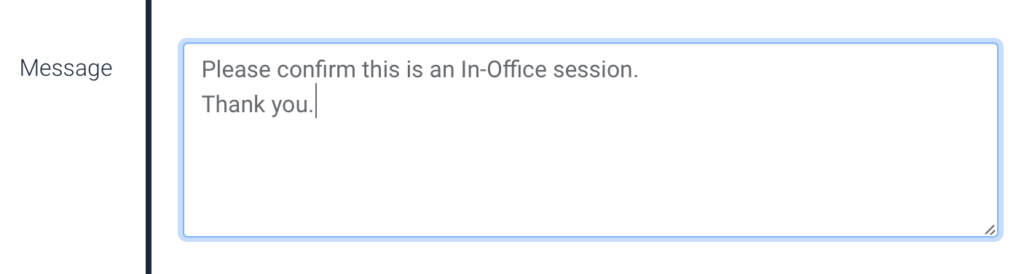
2- You add a comment in the Message box

In ClientConnect I can see my invoices. When I view them, the bottom notes mention it is not a suitable document for insurance purposes. Will you provide me with something I can submit?

Of course. The invoices you see in the MY ACCOUNT section contain a lot of detailed information that would be unnecessary for insurers. It is preferable you do not provide those in order to avoid potential investigations or delays in your insurance claim processing.

Once an invoice is fully paid, you will receive a document that can serve as official receipt in ClientConnect. That document will have all the prescribed information to submit to your insurer. This will be made available within 24 business hours.

I am not receiving or seeing my appointment reminder or other communications through ClientConnect

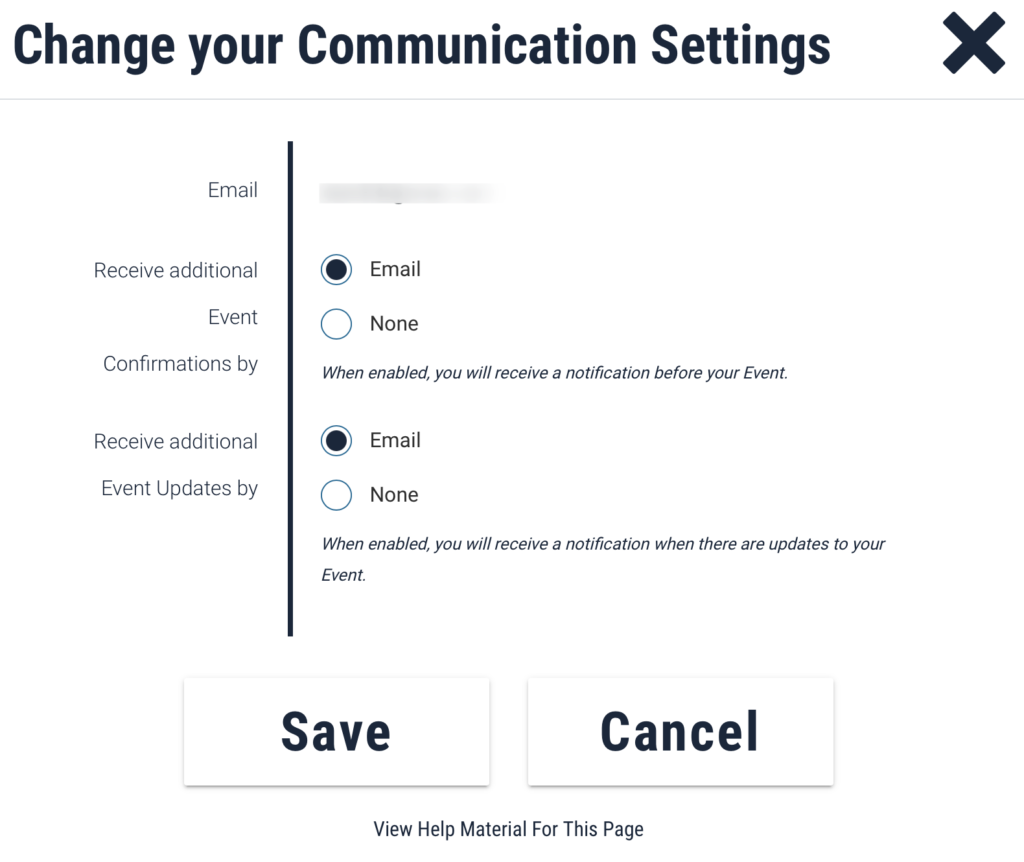
Please verify if you changed your ClientConnect communication settings. You can find them under MY CLIENTCONNECT section, then click on

This image has an empty alt attribute; its file name is CleanShot-2022-02-18-at-08.55.01@2x-150x150.png

You should tick “Email” to the following options to ensure you are receiving the important communications.

I have a dependant and I would like to manage my dependant’s ClientConnect account. Is this possible?

Absolutely!

The surrogate feature in ClientConnect allows another Individual to act on behalf of the client (with whom they have a relationship with). This feature allows an Individual to manage all aspects of another Individual’s ClientConnect account.

A Surrogate is typically, but not limited to, one of the parents of a child or adolescent. They would be able to make appointments, pay for invoices, fill out documents, etc… in the name of the dependant. When the surrogate logs in to ClientConnect, they will be asked which profile they want to use: theirs or that of their dependant.

IMPORTANT NOTE: the dependant and the surrogate have to have their own district email address registered with us otherwise surrogacy will not work.

Funders (entities that ONLY pay the invoices of a client) like WSIB, Medavie BlueCross, a lawyer’s firm, etc.. are not surrogates. Some parents that only pay for invoices can fall into this category. Funder do not have access to ClientConnect and, therefore, cannot view or pay invoices, cannot manage appointments, etc.

I have a dependant and I would like to have access to paying their invoices only. Is this possible?

Although it is possible you will not have access to your dependant’s ClientConnect account. They will have to communicate you the invoice information (invoice number and amount) or save and email you the invoice. Our website page for payments will give you indications on how to pay via Interac E-Transfers and has a Paypal portal.

It would be a good idea to contact our Receptionists via email at ottawa.admin@cfir.ca and ask them to add you to your dependant’s account as a contact for payment purposes.

My therapist uses Huddle for teletherapy meetings. Will I be changing links?

Huddle permanent room links will not change unless you change therapists. Please keep it bookmarked as they will not necessarily be visible now in ClientConnect.

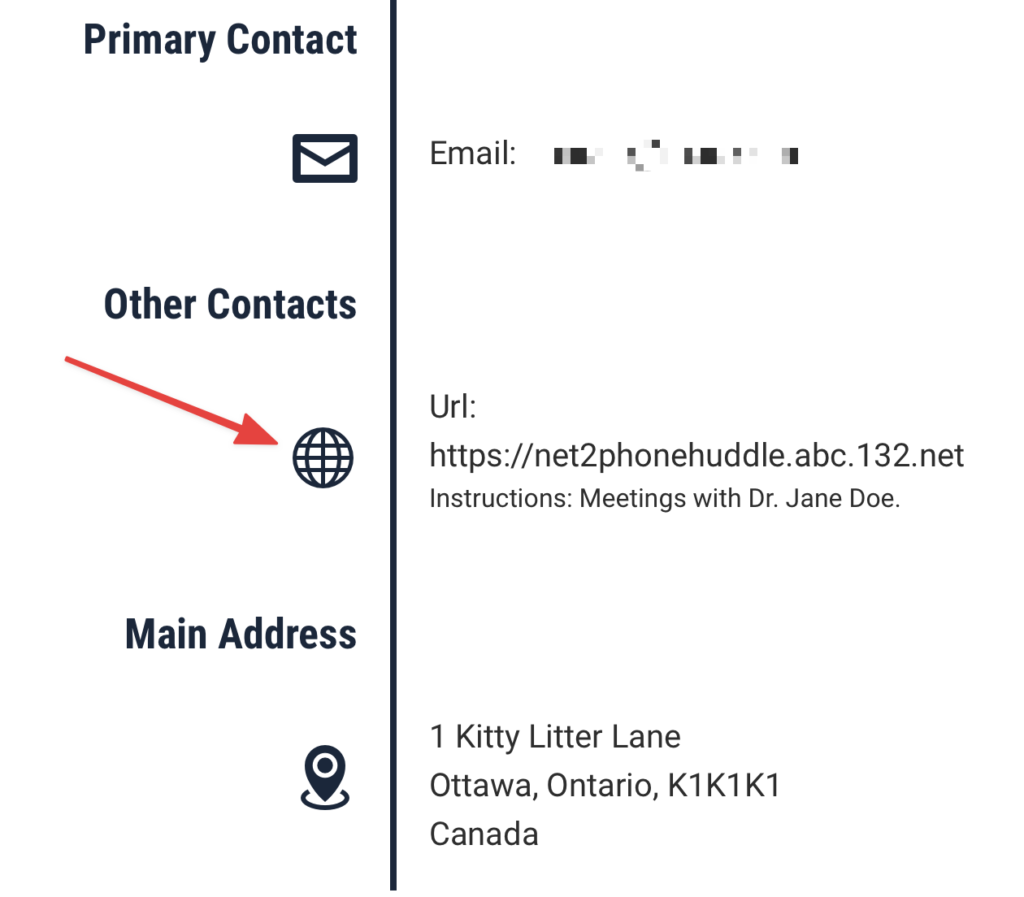
If you were to start seeing another therapist, a new Huddle link would be provided and you would see it in ClientConnect under ABOUT ME in the contacts area.

My therapist uses SecureVideo for teletherapy meetings. How will I be notified of the link for each session?

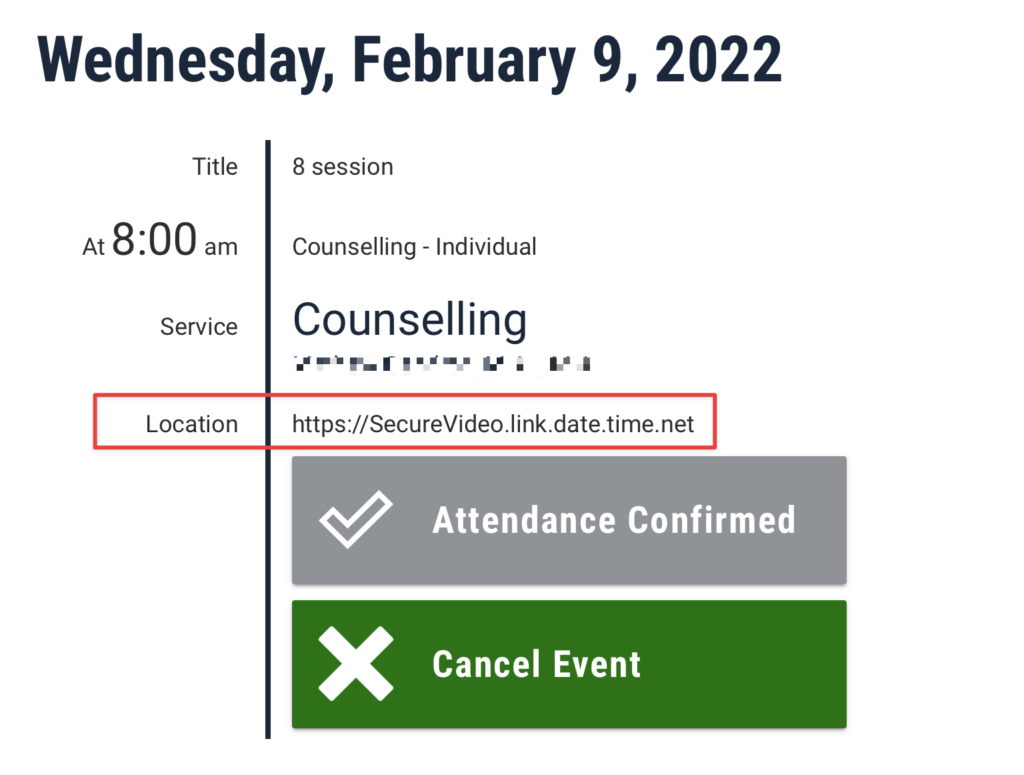
SecureVideo links change at every meeting. As soon as it is booked in the SecureVideo portal, the link will appear under CALENDAR / UPCOMING tab. Simply locate the date of the event and the link will be showing. Click on the link or copy it and paste it in your browser.

The link may be available only very close to the date of the appointment.

I received the official invoice/receipt for my insurance. The only option I see is to print. Can I just save an electronic version instead?

Yes! Depending on your device’s operating system it may show different options.

Start by clicking “Print this invoice” (or document, or receipt)

On a MAC:
Choose File > Export as PDF
Type a name for your file and a location to save, and click Save.

On WINDOWS:
Choose File > Print.
Choose Adobe PDF as the printer in the Print dialog box.
Click Print. Type a name for your file and a location to save, and click Save.

On an iPHONE or iPAD:
Once the document is open in the web browser
Click the arrow at the bottom of the screen (“share” function)
You should now see the document title as “Penelope Case manage….”
Then just under the title locate “Options” and click on it
Select PDF as a format, then click OK
From here you can swipe through all the options: you can either email it to yourself using your email client, save it on your iPad or in iCloud, print, etc…

When I cancel an appointment, I get the error: Post not supported (405)

We are aware of this error message and our support team is looking into it. Although it shows as an error, it appears that the appointment is in fact really cancelled. You may check if it still appears by going to the “Calendar” section in ClientConnect and ensure it no longer appears. You will also receive a message of the cancellation in your “Inbox” section.

I activated but I can’t see or update appointments nor can access invoices.

If you are not part of a couple or family account, please verify that your web browser is part of those compatible with ClientConnect.

If you are part of a couple or family account, it is due to the concept of Presenting Participant in ClientConnect.

The Presenting Participant is to be considered the main individual of a couple or family account. That individual is identified as responsible for the financials but also, they are the only ones who can cancel an appointment through ClientConnect that was made for the couple or the family.

Luckily it is easy to change who is the presenting participant. Please send your request to clientconnect@cfir.ca, through a discussion within ClientConnect or via your therapist.

WADING THROUGH YOUR MENTAL HEALTH TREATMENT OPTIONS—CONSIDERING YOUR NEXT STEPS TOWARD BRIGHTER, CALMER DAYS

Each year, millions of Canadians suffer from mild to debilitating bouts of depression and anxiety. “It’s so hard to figure out what next steps to take when your attention, concentration, emotional distress and basic sense of vitality are so affected by declining mental health” says Dr. Lila Z. Hakim, C.Psych, Centre Director at the Centre for Interpersonal Relationships in both downtown Ottawa and Toronto.

Figuring out your next steps isn’t so easy. Clients are often overwhelmed by the numerous choices and decisions that have to be made about treatment possibilities and who might be the appropriate mental health professional to help them.

Decades of research on depression and anxiety point to biological, attachment, developmental, childhood trauma, socio-cultural context, environment, emotional, cognitive, behavioural, personality and interpersonal factors as possible precipitators of symptoms. What’s causing you to be depressed and anxious can be complex to sort through.

“CFIR mental health clinicians employ a biopsychosocial model to understand and capture a broad picture of the factors that may be affecting your well-being. It’s not always so simple that there is only a sole factor underlying your symptoms—sometimes many factors have to be considered to address the different layers underlying a person’s distress” cautions Dr. Hakim, C.Psych., “and it’s important to find a practitioner that can understand your depression and anxiety in complex ways. For example, sometimes it’s not just about changing thoughts and how you are thinking about a situation.”

Choices and decisions also have to be made about treatment —medication and/or psychological treatment and what type of psychotherapy might be best for you. Adding to the burden of decision-making is the recent advent of computerized psychological treatments—where treatment involves minimal contact with a care provider. Dr. Hakim, C.Psych. offers several suggestions to help you wade through these complex waters.

“It’s always important to have a general physical health exam to rule out physical causes for your depression and anxiety. Your physician can help you with decisions about which medication might be best for you, and there’s even testing you can have done that can inform you about which medications might have lesser side effects for you. Physicians have different levels of training in mental health treatment and do provide medication options. You might want to also seek out a professional trained as a mental health practitioner along with your visit to your doctor”, according to Dr. Hakim, C.Psych.

Whether you decide to take medication or engage in psychotherapy as a first line treatment approach will depend on you. Numerous research studies, however, have been conducted to guide clients on this subject. Dr. Hakim, C.Psych provides insights from these studies; “Research shows that psychotherapy is effective for mild to moderate symptoms, and a combination of both medication and psychotherapy might be the way to go for individuals with severe and debilitating symptoms. Medication increases neurotransmitters in your brain and can make you feel better, and adding psychotherapy to the mix improves outcomes because the other possible factors underlying your depression and anxiety symptoms still have to be addressed.”

When it comes to choosing what type of psychotherapy might be right for you, clients have further complex decisions in front of them. Dr. Hakim, C.Psych. provides further guidance to help you sort through these decisions. “Some mental health care professionals provide clients with support to change the way they think about situations, or provide skills and strategies to deal with distress and symptoms (e.g., Cognitive-Behavioural Therapy). These types of approaches try to help the client to feel better by managing symptoms, yet there are often many potential factors underlying anxiety and depression. Other mental health care professionals will work with your past and present-day experiences to help you gain awareness and insight into your emotions, self and relationship patterns, self-protection and defences that interfere with healthy functioning. These approaches help you to find more adaptive responses to everyday life but requires a deeper exploration of and engagement with the individual’s emotions, self and past experiences (e.g., Psychodynamic Therapy).”

Some individuals may prefer to learn strategies to diminish symptoms and feel good without deeply understanding themselves by exploring their pasts and emotional reactions to every day life while others may want to understand themselves more profoundly. “The idea that our past influences our present-day experience is a commonly held notion in the field. The way we think and feel about ourselves, think and emotionally react and respond to others, and how we behave and relate to others in our present-day is highly influenced by our past experiences” according to Dr. Hakim, C.Psych. Her final word on this topic is “that finding a mental health clinician who can flexibly work with you and integrate different psychotherapy models might provide more opportunities to work on different factors underlying depression and anxiety symptoms.” This view of treatment is the basic philosophy that underlies the treatment approach offered by the over 75 mental health clinicians at Dr. Hakim, C.Psych.’s centre. They offer flexible treatment options to work with different factors underlying anxiety and depression, and can move between symptom and distress management to working with deeper underlying factors causing your distress.

Finally, Dr. Hakim, C.Psych. shares her perspective on computerized psychological treatment. ‘In Ontario, free computerized psychological treatment services are offered, which is good and I do refer my clients to these sites as an adjunct to the treatment I am providing. Computerized treatment isn’t for everyone and doesn’t necessarily capture the complex factors underlying a unique individuals struggles with depression and anxiety. Sitting alone in front of a computer with only intermittent meetings with a mental health care professional may not allow for the necessary support and treatment related to the numerous factors underlying symptoms. Depression and anxiety have attachment, developmental, emotional, personality and interpersonal factors that are difficult to address on a computer.”

The Master Your Future Fertility Course

Featured by Primerwellness

Introducing The Master Your Future Fertility Program: The first online course designed to help you optimize your future fertility and stress less about timelines. Not from girlfriends or Google, but from top doctors and specialists. Doors close May 9.

Course Title: The Master Your Future Fertility Course
Sign Up Link: https://bit.ly/primercourse
Early bird price ($197 CAD) ends: Sunday May 9 at 11:59 EST
Doors Close: Sunday May 16 at 11:59 EST
Course Begins: Monday May 17
Special Promo Code for 20% off: DRHAKIM20

Imposter Syndrome – Can You Relate?

In life, we all experience what it feels like to start something new. We might start a new job, begin school or a class, or experience a significant life transition (e.g., becoming a parent). For some of us, starting something new can lead to intense anxieties and fear-based distress, and we can worry that somehow we might be exposed as unworthy, incompetent, or fraudulent people. This phenomenon is aptly referred to as the “imposter syndrome” and can have powerful psychological impacts and consequences to us. While imposter syndrome is not recognized as a formal psychiatric disorder, it can result in long-lasting anxiety, depression, low self-esteem, and self-handicapping.

Imposter syndrome can manifest differently in different individuals, but many commonalities exist that indicate its presence. Some indications you may be experiencing imposter syndrome include the following:

  • You have chronic feelings of self-doubt;
  • You avoid or procrastinate on tasks that involve evaluation of your efforts;
  • You tend to attribute your successes to external factors (e.g., luck) while blaming yourself for perceived failures;
  • You have difficulty accepting compliments or praise about your accomplishments;
  • You recall your failures more quickly than your achievements; and/or,
  • You often compare yourself to others and believe they are more competent than you without much evidence.

If this sounds like something you might be struggling with, don’t despair! There are ways you can cope with imposter syndrome and start to feel better about yourself and your abilities over time. Here are some tips to get started:

Name it: Recognize that what you are feeling is real and valid.

Reach out: Connect with others to normalize your experience. Most people have felt similarly at one point or another in their lives. Through sharing our experiences, we can reduce feeling isolated and alone.

Ask for help when needed: Don’t suffer in silence. Ask for help when you need it from a teacher, mentor, manager, parent, partner, or friend. If you have trouble asking for support, start by asking someone who is the least intimidating to approach and feels trustworthy or safe.

Practice self-compassion: Suffering is a natural part of life, and it is okay to feel low at times. Pay attention to your negative self-talk and judgments. Offer yourself the same kindness and understanding you would a loved one. Write yourself a “love” letter or try a loving-kindness meditation.

Give yourself credit for your successes: If you are biased towards remembering your failures over your accomplishments, keep a credit list. However small they might seem, track your achievements to shift your mindset from noticing what went wrong to what went right!

Bring awareness to your beliefs: Acknowledge and challenge distorted beliefs like “I should know everything” or “It’s bad to ask for help.” These beliefs perpetuate the impossible task you lay on yourself to have all the answers. Permit yourself to be human and have off days.

Samantha Szirmak, B.A., provides therapy to adults experiencing a wide range of concerns, including anxiety, depression, shame/guilt, stress, grief, low self-esteem, identity struggles, body image concerns, chronic pain, and relationship difficulties. She also supports clients coping with traumatic life experiences or difficult life transitions. She provides psychological services under the supervision of Dr. Jean Kim, C. Psych., at Centre for Interpersonal Relationships (CFIR).

References

Bravata, D. M., Watts, S. A., Keefer, A. L., Madhusudhan, D. K., Taylor, K. T., Clark, D. M., Nelson, R. S., Cokley, K. O., & Hagg, H. K. (2020). Prevalence, Predictors, and Treatment of Impostor Syndrome: a Systematic Review. Journal of general internal medicine, 35(4), 1252–1275. https://doi.org/10.1007/s11606-019-05364-1

Clance, P. R. (n.d.) Imposter Phenomenon. Retrieved December 10, 2020, from https://www.paulineroseclance.com/impostor_phenomenon.html

Craddock, S., Birnbaum, M., Rodriguez, K., Cobb, C., & Zeeh, S. (2011). Doctoral Students and the Impostor Phenomenon: Am I Smart Enough to Be Here? Journal of Student Affairs Research and Practice, 48(4), 429–442. https://doi.org/10.2202/1949-6605.6321

Our Sliding Scale Services Program* is now open for New Referrals. Psychotherapy Starting at $50/hr. *Available only in Ontario

Click here for more information.