

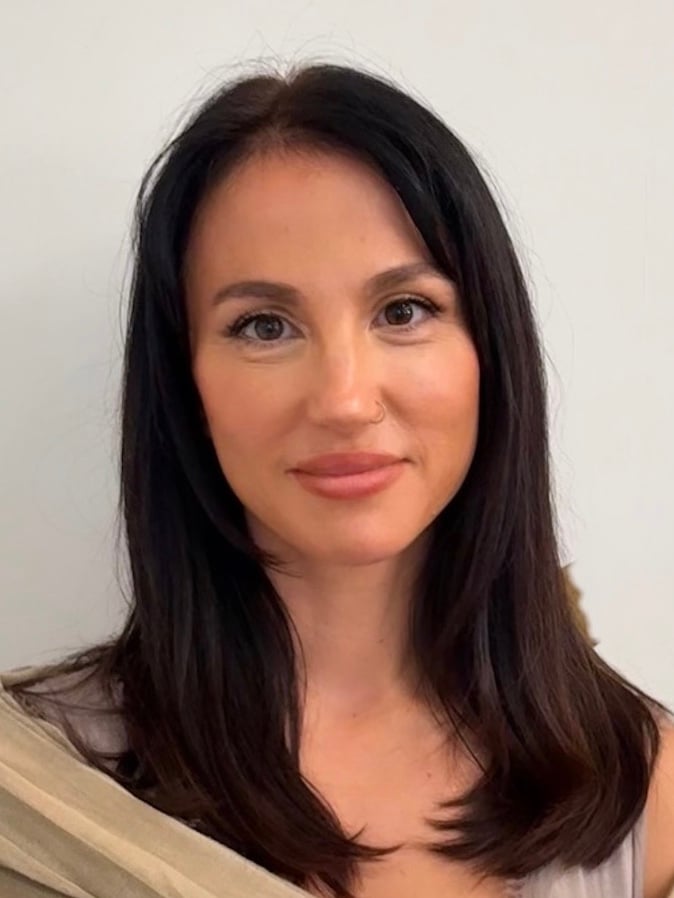
Valery Vengerov, M.Psy., R.P., Senior Psychotherapist
I’m Valery, a psychotherapist who works with adults and couples who want to understand themselves more deeply, change longstanding patterns, and create more fulfilling relationships with themselves and others.
I believe that many of the difficulties that bring us to therapy, anxiety, depression, relationship conflict, insecurity, emotional reactivity, disconnection, or simply the feeling that something isn’t quite right, make more sense when we understand what is happening underneath them.
Often, the ways we think, feel, relate, protect ourselves, and respond to other people were shaped long before we consciously chose them. They may once have helped us adapt, belong, stay connected, or protect ourselves. But over time, those same patterns can begin to limit us.
My work is about making those patterns visible and understandable and then helping you change how you experience and respond to them.
I bring over a decade of clinical experience to my work and have spent much of my career working with adults and couples. My approach integrates psychodynamic and attachment-based therapy with experiential, relational, trauma-informed, somatic, and nervous-system-focused approaches. Rather than relying on one method, I draw from different ways of working depending on the person in front of me and what will help us reach the heart of the issue.
With individuals, we may explore the relationship between your present struggles and the deeper emotional patterns shaping them: how you see yourself, what you expect from others, what happens when you feel hurt or threatened, what you protect yourself from, and what you may have learned to suppress or disconnect from.
But insight is only part of the work. I also incorporate practical, experiential and somatic approaches that help you work directly with emotions as they arise, regulate your nervous system, build greater capacity for difficult feelings, and practice responding differently in real time. The goal is not simply to understand why you are the way you are, but to help your emotional and physiological responses actually begin to change.
With couples, I help partners look beneath the content of their arguments to understand the emotional dynamics driving them. What looks like a fight about communication, sex, commitment, household responsibilities, or another recurring issue is often connected to something deeper: feeling dismissed, unwanted, controlled, criticized, unimportant, unsafe, or alone.
Couples work is also highly experiential. We pay attention to what happens between you in the room: how each partner’s nervous system responds to disconnection, conflict, vulnerability, or closeness, and practice slowing those reactions down and creating new ways of reaching for and responding to one another. This gives couples practical ways to regulate themselves during conflict, interrupt familiar cycles, communicate more effectively, and build greater emotional safety and intimacy.
My style as a therapist is warm, engaged, curious, and direct. I don’t believe therapy should be a place where you talk while I simply listen from a distance. I will listen carefully, but I will also ask questions, offer observations, notice patterns, challenge you when it may be helpful, and work collaboratively with you to understand what is happening beneath the surface.
I’m particularly interested in the places where psychology meets the larger more existential question of who we are. Therapy can help us understand our conditioning, histories, defenses, and emotional patterns, but I also believe we are more than the patterns we have accumulated. Part of our work can involve learning to recognize what has shaped you without reducing yourself to it.
Ultimately, I hope therapy helps you become more of yourself: more emotionally free, more connected, more capable of intimacy, more able to trust your own experience, and more flexible in how you respond to life.
Therapy is not about becoming a perfected version of yourself. It is about understanding yourself deeply enough that you have more choice. and creating the conditions for something different to emerge.
If that is the kind of work you are looking for, I would be glad to meet you.
Treatments
- Acute/Single-Event Trauma
- Anger & Emotion Regulation
- Anxiety & Stress
- Career & Workplace
- Complex/Long-Term Trauma
- Couples Therapy
- Depression, Mood & Grief
- Eating, Weight & Body Image
- Interpersonal Relationships
- Multicultural
- Obsessive-Compulsive
- Personality
- Self-Growth & Self-Esteem
- Sex Therapy
- Sexual Addiction
- Sexuality, Gender & Relationship Diversity
- Substance Use
Assessment
Therapies
- Acceptance and Commitment Therapy (ACT)
- Attachment-Based/Mentalization Therapy
- Cognitive-Behavioural Therapy (CBT)
- Dialectical-Behavioural Therapy (DBT)
- Emotion(ally)-Focused Therapy (EFT, EFFT)
- Existential-Humanistic Therapy
- Eye Movement Desensitization Reprocessing (EMDR)
- Integrative Therapy
- Mindfulness-Based Therapies (E.G., MBSR, MBCT)
- Motivational Interviewing (MI, MET)
- Psychodynamic/Analytic
- Relational Therapy
- Systemic Therapy
Make An Appointment
Help Is Available
Our team is here to provide inclusive and accessible solutions to help you in building a secure, resilient self, and help strengthen your relationships.

Toll Free: 1.855.779.2347
Monday
Tuesday
Wednesday
Thursday
Friday
Saturday
Sunday
8:00AM – 8:00PM
8:00AM – 8:00PM
8:00AM – 8:00PM
8:00AM – 8:00PM
8:00AM – 5:00PM
8:30AM – 4:30PM
Closed
Eastern Time Zone
Ottawa Centre
336 MacLaren St.
Ottawa ON K2P 0M6
(MacLaren & O’Connor)
Local: 613.686.6645
Fax: 613.714.1013
St. Catharines Centre
300 – 43 Church St.
St. Catharines ON L2R 7E1
(Church & Wellington)
Local: 647.417.0182
Fax: 647.793.5438
Toronto Centre
520 – 790 Bay St., Box 87
Toronto ON M5G 1N8
(Bay & College)
Local: 647.417.0182
Fax: 647.793.5438
Charlottetown PE Centre
101 – 75 Fitzroy St.
Charlottetown PE C1A 1R6
(Fitzroy & Queen)
Local: 782.355.3233
Fax: 782.355.3232
DISCLAIMER
All stock photos used on this website are symbolic representations of clients or the therapeutic process and do not include actual clients. They are not indicative of a promised counseling outcome, as each individual’s experience in therapy is unique.
By clicking the any of the social media links, you acknowledge that a link or information from the Centre For Interpersonal Relationships Inc. website may be posted on your corresponding account. The Centre For Interpersonal Relationships Inc. cannot be held responsible for breach of privacy while individuals willingly create a connection between our public website and their social media(s) account(s). Clicking on any of the link buttons does not imply nor suggest in any way that you are, have been or will be a client at CFIR.
Centre For Interpersonal Relationships Inc. strives to ensure that all information contained in this website is accurate and reliable. The Centre For Interpersonal Relationships Inc., its Board of Directors, management, staff and/or its associates shall not be held responsible nor accept any form of liability for any type of injury, loss or damage as a direct or indirect result of the use, inability to use, misuse or abuse of the website’s content or functions.
WWW.CFIR.CA is a gateway offered as a service to independent registered mental health professionals. The use of “we”, “our” and “ours” refers to registered mental health professionals. The information contained in this website is not intended to replace consultations with your mental health professional or to provide medical advice or diagnosis.
CFIR Clinical Psychology Residency—CPA Accreditation News
Psychologists at the Centre for Interpersonal Relationships (CFIR) are thrilled to announce that our doctoral residency training program has received accreditation by the Canadian Psychological Association (CPA) for a 4-year term. Our next site visit will take place 2026-2027.
Information regarding accreditation can be obtained by contacting the CPA Accreditation Office at:
Canadian Psychological Association
141 Laurier Avenue West, Suite 702
Ottawa, Ontario, K1P 5J3
Tel: 613-237-2144
Toll Free: 1-888-472-0657
Email: accreditationoffice@cpa.ca
Website: https://www.cpa.ca/accreditation/
Our registered psychologists are proudly affiliated as clinical supervisors with the following universities:
UNIVERSITY OF OTTAWA

UNIVERSITY OF TORONTO


